Frequently Asked Questions about stainless steel sinks
Everything you need to know about purchasing, cleaning or replacing a stainless steel kitchen sink
BLANCO stainless steel is crafted with premium quality 304 series, 18/10 chrome-nickel content and is engineered in Germany to exacting standards of precision. BLANCO stainless steel has a non-porous surface which prevents dirt, bacteria and microorganisms from accumulating. It has a natural resistance to common household acids, marks and stains such as those made by coffee or certain types of fruits and vegetables.
The sink gauge refers to the thickness of the metal. Stainless steel is measured in gauges; the higher the gauge the thinner the material. Most BLANCO sinks are either 18 or 20 gauge, are fabricated to the highest standards, and are designed according to the needs of homeowners.
Stainless steel sinks do NOT rust but may appear to. Traditional orange/red rust marks in a high quality stainless steel sink can almost always be traced to one of three sources:
- Steel wool pads used for cleaning
- Tin coated steel cans or cast iron pots left in the sink while wet
- Iron deposits in the water
Rust stains are not a sign of sink deterioration, they are just simple deposits on the surface of the sink. Scrubbing the stains with a mild cleanser or metal cleaner like Flitz, almost always solves the problem immediately. Be sure to clean in the same direction as the grain lines of the finish.
BLANCO recommends 18 gauge as the optimal gauge. 16 gauge is thicker and adds additional weight to the sink. One may assume that a 16 gauge sink is a better value simply because it is thicker than 18 gauge. 18 gauge stainless, used for BLANCO and other high quality sinks, is only .5% thinner than 16 gauge and is the premium steel needed to make a quality and durable sink.
Chrome-Nickel content refers to the percentage of chrome and nickel in the sink’s stainless steel. Chrome gives stainless steel its luster & durability, while nickel provides hardness & strength. 18/10 Stainless Steel means the sink contains 18% Chromium or Chrome and 10% Nickel. All BLANCO Stainless Steel collections have an 18/10 chrome-nickel content, offering superior durability and corrosive resistance.
Yes, the same kind of sound deadening pads used by luxury automobile manufacturers are installed on many of our stainless steel sink models.
All BLANCO sinks and faucets are supported by a Limited Lifetime Warranty. For full warranty details visit our Warranty Page.
Stainless steel sink cleaning & maintenance
Stainless steel is very easy to clean and does not require harsh chemicals. Clean your stainless steel sink with a paste of baking soda and water, then rinse with vinegar. Vinegar is a natural disinfectant that removes hard water stains from your stainless steel sink. For more cleaning tips, or to learn how to deep clean your stainless steel sink, watch our Cleaning & Care video, or visit our stainless steel cleaning page.
Bleach can stain and damage stainless steel. Do not leave dirty water and cleaning solution residues to dry on your stainless steel sink; it will dull the finish and leave permanent stains.
Use a 1:1 ratio of diluted vinegar and water and store it in a spray bottle. Then you can spritz and disinfect your kitchen sink, counters, or any other spots that you'd normally use bleach but want to be food-safe. To counteract the vinegar smell, you can use soapy water to rinse the sink afterward.
We recommend using BLANCOCLEAN, glass cleaner or 50% proof vinegar mixed with water (available in hardware stores). Avoid table vinegar as the concentration of vinegar is very low.
You can improve the sheen on your sink by using BLANCOCLEAN, or Flitz cleaning products.
Unless pure distilled water flows from your faucet, there will be dissolved minerals and salts in your tap water. When tap water evaporates, the minerals and salts are sometimes left behind. These are the same water spots you see on your car after a car wash. If you dry your sink after rinsing, these spots will not form. If you have hard water deposits, try to use a little white vinegar to remove them. After removal, rinse and dry the sink.
Construction chemicals, solvents and many household cleaners contain chlorides and acids which can react and damage stainless steel. Chlorine bleach (chloride) or products which contain it (many ordinary household cleaners do) can stain/corrode a stainless steel sink. Muriatic acid which may be used by a ceramic tile person to clean grout, is not recommended. Plumbing PVC solvents can also cause problems. If a dangerous chemical gets on the sink, wash it immediately with water. Rinse well and dry the sink with a towel or paper towels. These facts are true for ANY kitchen stainless steel sink, in any gauge, offered by any company.
Stainless steel sink installation & repair
The best type of sink installation depends on your routine, space and style preference. Find out what is the best sink installation type for you with our handy Sink Guide.
Multicolored stains or residue on the bottom of sinks are most commonly traced to minerals contained in your water or by salts from water softeners. In most cases, these stains can be removed by using Shiny Sinks or Bar Keepers Friend. Be sure to clean in the same direction as the grain lines of the finish. Rinse well and dry the sink.
Apply scratch-free household sink bleach to a water-moistened cloth. Rub the cloth against the area where the paint was in slow, circular motions for 30 seconds. Rinse the bleach off the stainless steel with room temperature water. Let the stainless steel air-dry.
Yes, you can restore stainless steel sinks with deep cleaning treatments and the use of more intense maintenance products. Steel polishers are an excellent way to bring back the shine of stainless steel. However, please follow the directions closely and always clean and polish in the same direction as the brushed finish.
Yes, all of our stainless steel sinks come with at least one pre-drilled faucet hole, but some models have 3-5 pre-drilled faucet and accessory holes available.
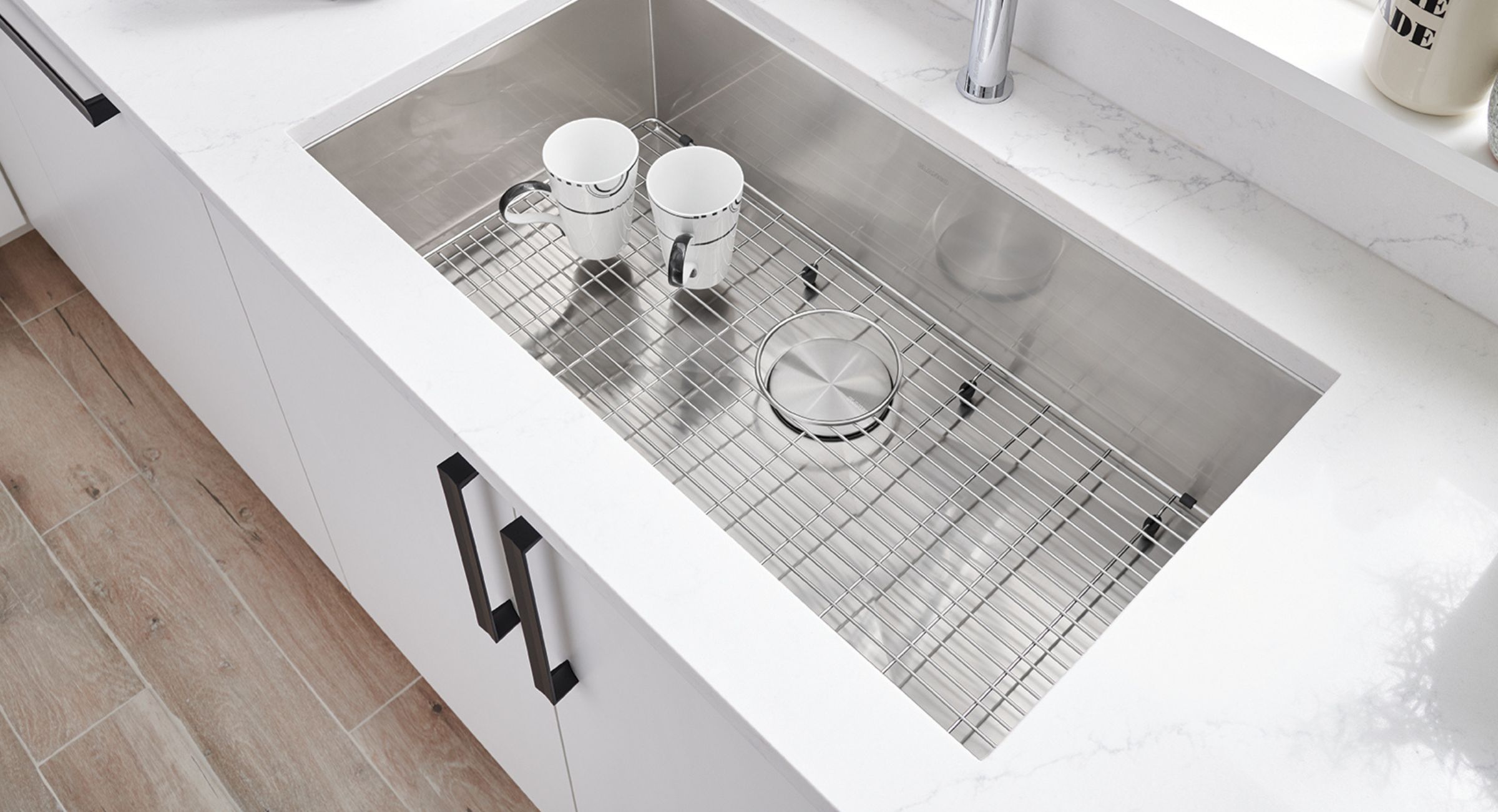
BLANCO offers a wide range of custom-fitted grids to protect the bottom of your stainless steel sink. DO NOT USE rubber coated mats, as discoloration of the sink may occur after prolonged use. Similarly, any wet sponges or cleaning materials left on the sink for long periods of time could stain the sink's surface.