Best ways to clean your stainless steel sink
Learn the best ways to clean your BLANCO stainless steel kitchen sink daily or weekly. Read our FAQs about removing rust and what not to use on stainless steel.
How to clean your stainless steel sink
For daily cleaning:
A BLANCO stainless steel sink will maintain its brilliance best if cleaned immediately after use. You’ll need dish soap, a soft sponge, and a cleaning cloth. Follow these 3 steps everyday to clean a stainless steel sink:
- Wet and squeeze some dish soap onto the soft side of a sponge.
- Wipe the stainless steel surface in the direction of the brushed finish.
- Rinse with clean water and dry in the direction of the brushed finish with a microfiber cloth.
For weekly cleaning:
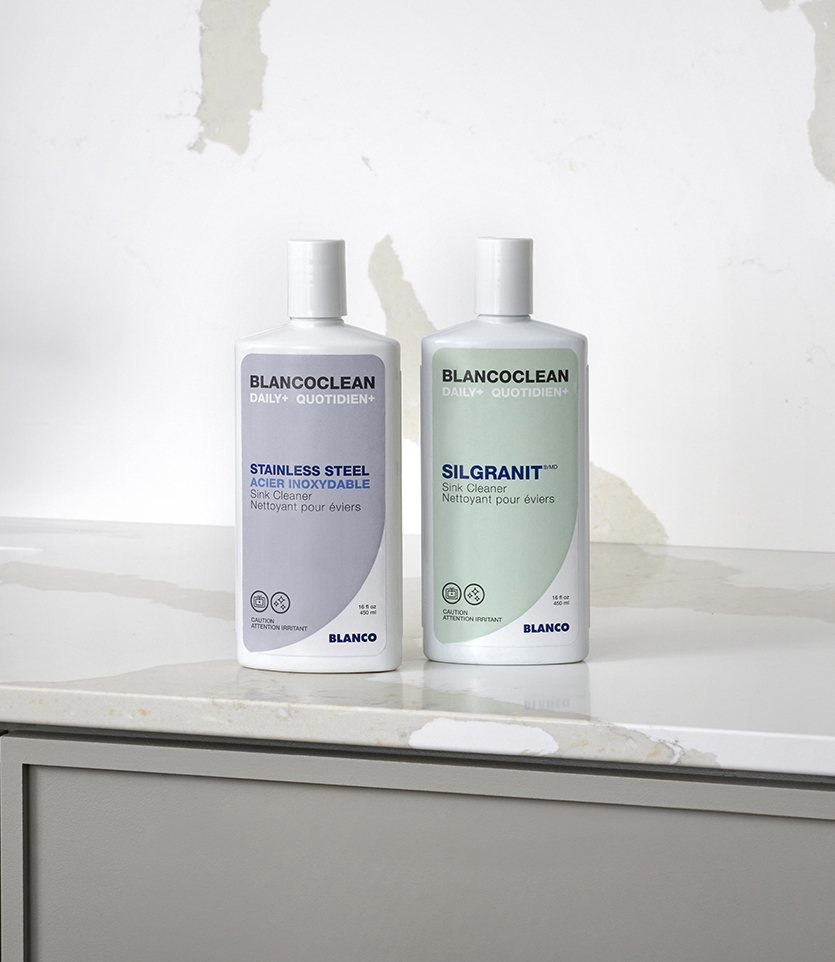
For a deeper, weekly cleaning to extend the life of your BLANCO sink, use BLANCOCLEAN Daily+ to reduce limescale and soap scum buildup. Follow these 3 steps weekly to clean a stainless steel sink:
- Pour BLANCOCLEAN Daily+ directly onto the sink and let sit for 1-2 minutes to take effect.
- Wear a glove and wipe with the soft side of a wet sponge in the direction of the brushed finish.
- Rinse with clean water and dry in the direction of the brushed finish with a microfiber cloth.
FAQ: cleaning stainless steel sinks
- Do not use use aggressive cleaning agents such as strong abrasive cleansers that contain chlorine (usually sodium hypochlorite) or hydrochloric acid.
- Do not use bleach on stainless steel, as it can stain.
- Do not use use cleaning baths for silver.
- Do not use use steel wool, metal scrub pads, prickly brushes or the rough side of sponges—these will scratch and dull the surface of the sink.
- Do not drop sharp objects into your sink or use it as a cutting board. Materials that are harder than stainless steel can scratch, including stone, diamond, glass, ceramic or abrasives.
- Do not use rubber-coated mats as discoloration of the sink may occur after prolonged use.
- Use a sink bottom grid to protect your sink. BLANCO custom-sized stainless steel grids fit inside the bottom of the sink to protect against scratches caused by sharp utensils and other kitchen tools.
- Empty your sink each day. Remove all metal cookware to prevent rust spots.
Did you know that most stains are caused by discoloration adhered to limescale? When you remove limescale on a regular basis, you also remove the likelihood of stubborn stains in your sink. Tackle limescale deposits quickly and easily with the help of our Stainless Steel BLANCOCLEAN Daily+ cleaner.
Rinse and dry the sink thoroughly after each use, as physically drying your sink instead of air drying will help prevent water spots from appearing. Do not leave wet sponges or cleaning materials on the sink for long periods of time as this could stain the sink surface.
Stainless steel does not rust, however rust stains may occur as a result of other materials coming in contact with the sink, allowing iron particles to bond to the sink’s surface. Remove rust spots and stains with a mild cleanser. Iron particles introduced by metal cookware, steel wool pads, etc. can react with water and deposit rust spots. Do not use rubber-coated mats as discoloration of the sink may occur after prolonged use.